01
People are using AI, just not effectively
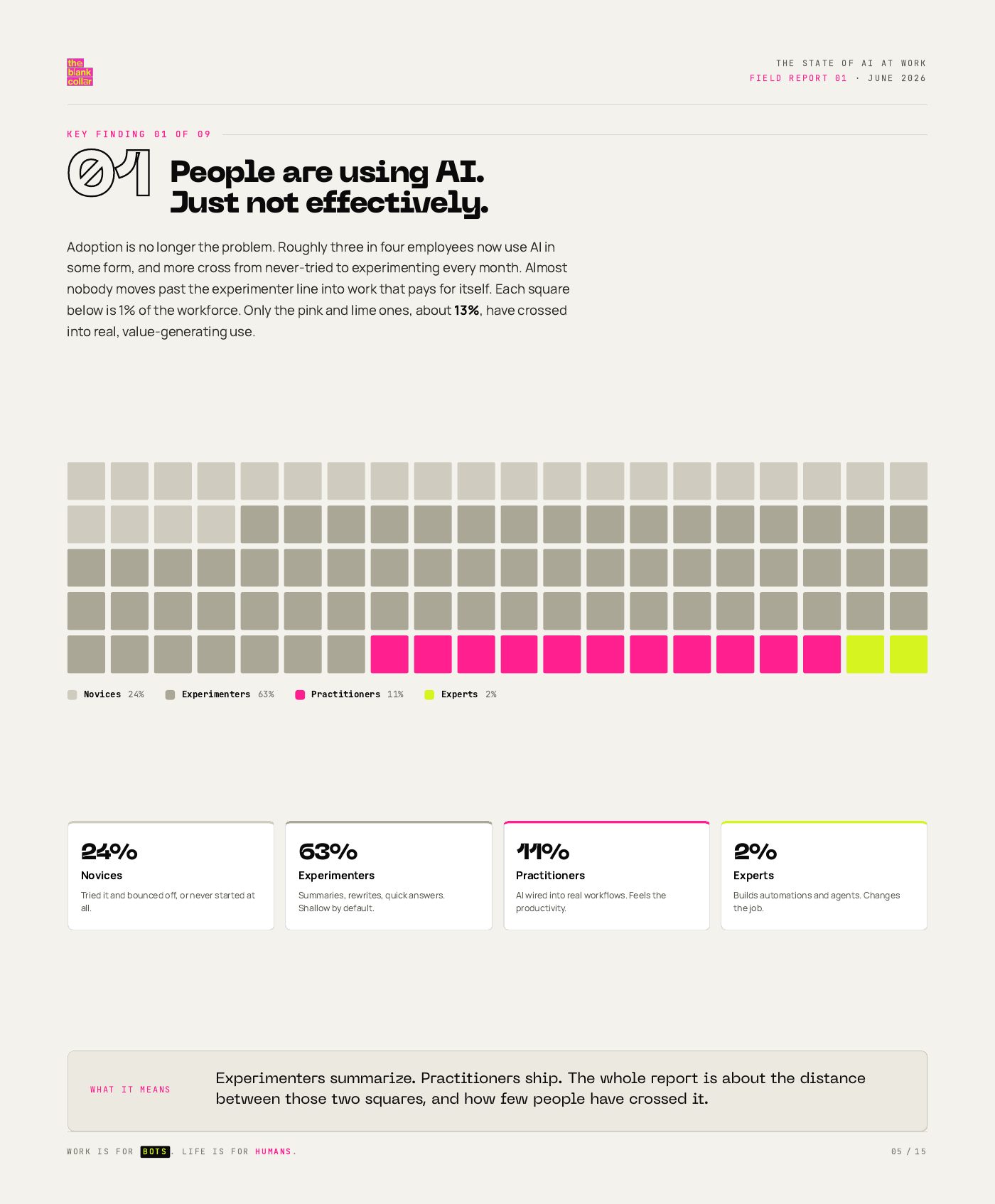
Adoption looks fine on paper. Sort the workforce by how well people actually use AI and it falls into four tiers, with 87% in the bottom two. The shallow end is crowded.
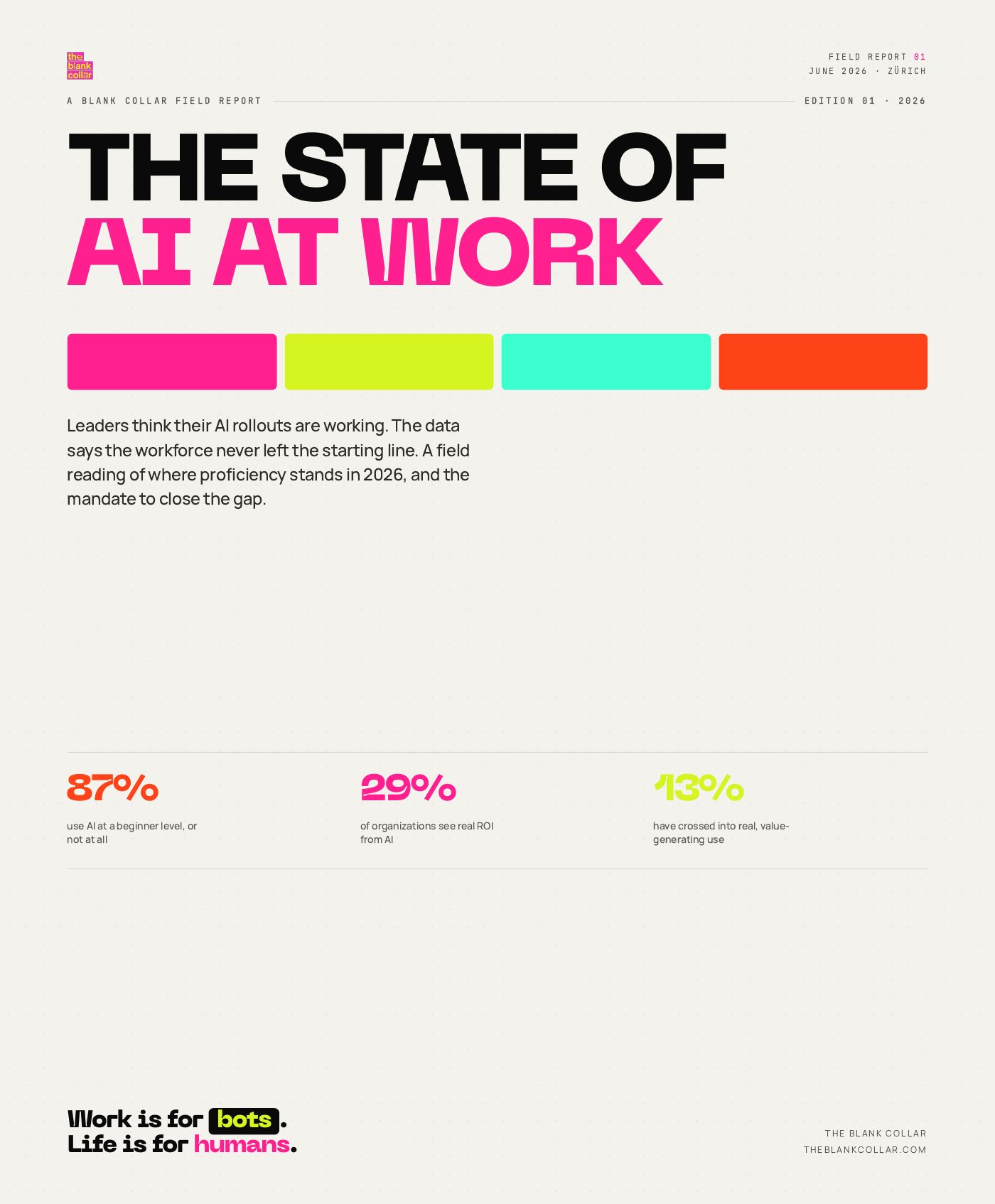
Around 76% of employees use AI at work and about 13% use it for real work. A 2026 field report on the gap between the two, and how to close it.
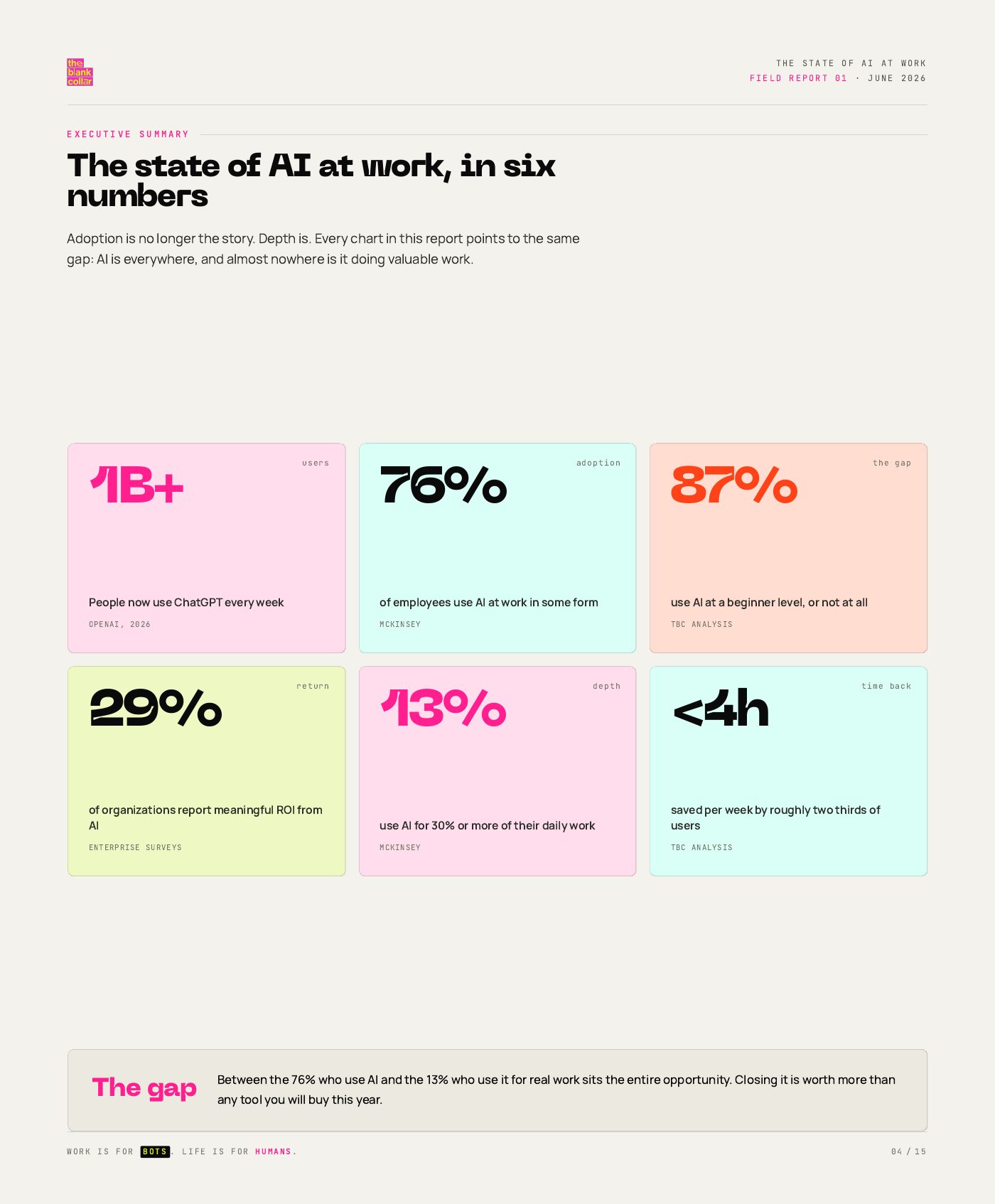
About 76% of employees now use AI at work, yet only around 13% use it for real, value-generating work, and just 29% of organizations see meaningful ROI. The tools arrived before the skill did. That gap, between using AI and using it well, is the whole opportunity, and it is still wide open.
Figures are from The Blank Collar’s own 2026 field report, a synthesis of the year’s workforce and enterprise AI studies. Read them as directional.
Adoption looks healthy from the top. Underneath, the same pattern repeats: AI is everywhere, and it is rarely pointed at work that pays.
Adoption looks fine on paper. Sort the workforce by how well people actually use AI and it falls into four tiers, with 87% in the bottom two. The shallow end is crowded.
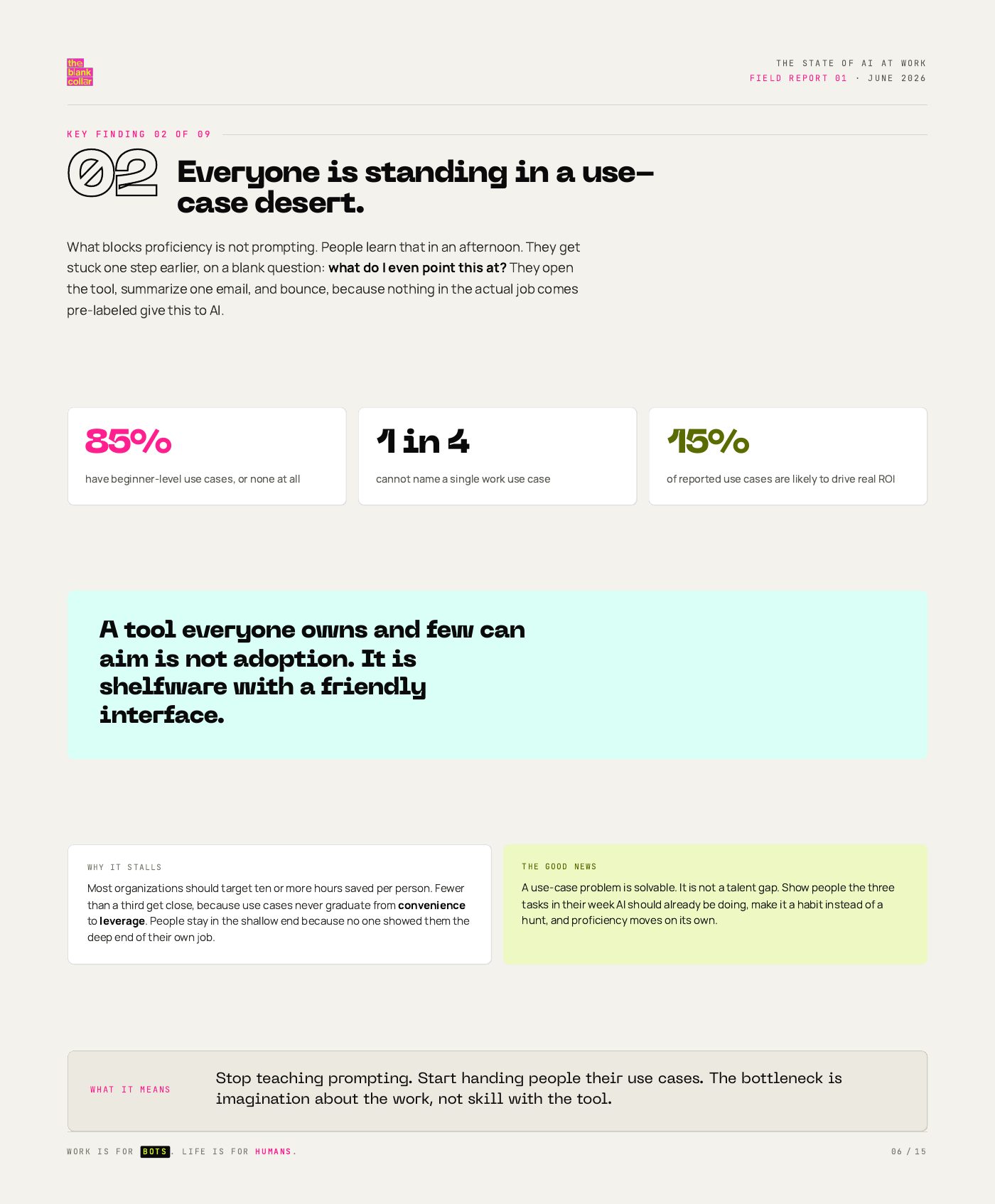
Roughly 85% of people have beginner-level use cases or none at all. Only about 15% are running the kind of use cases likely to drive real ROI. One in four cannot name a single work use case. Nobody has shown them the deep end of their own job.
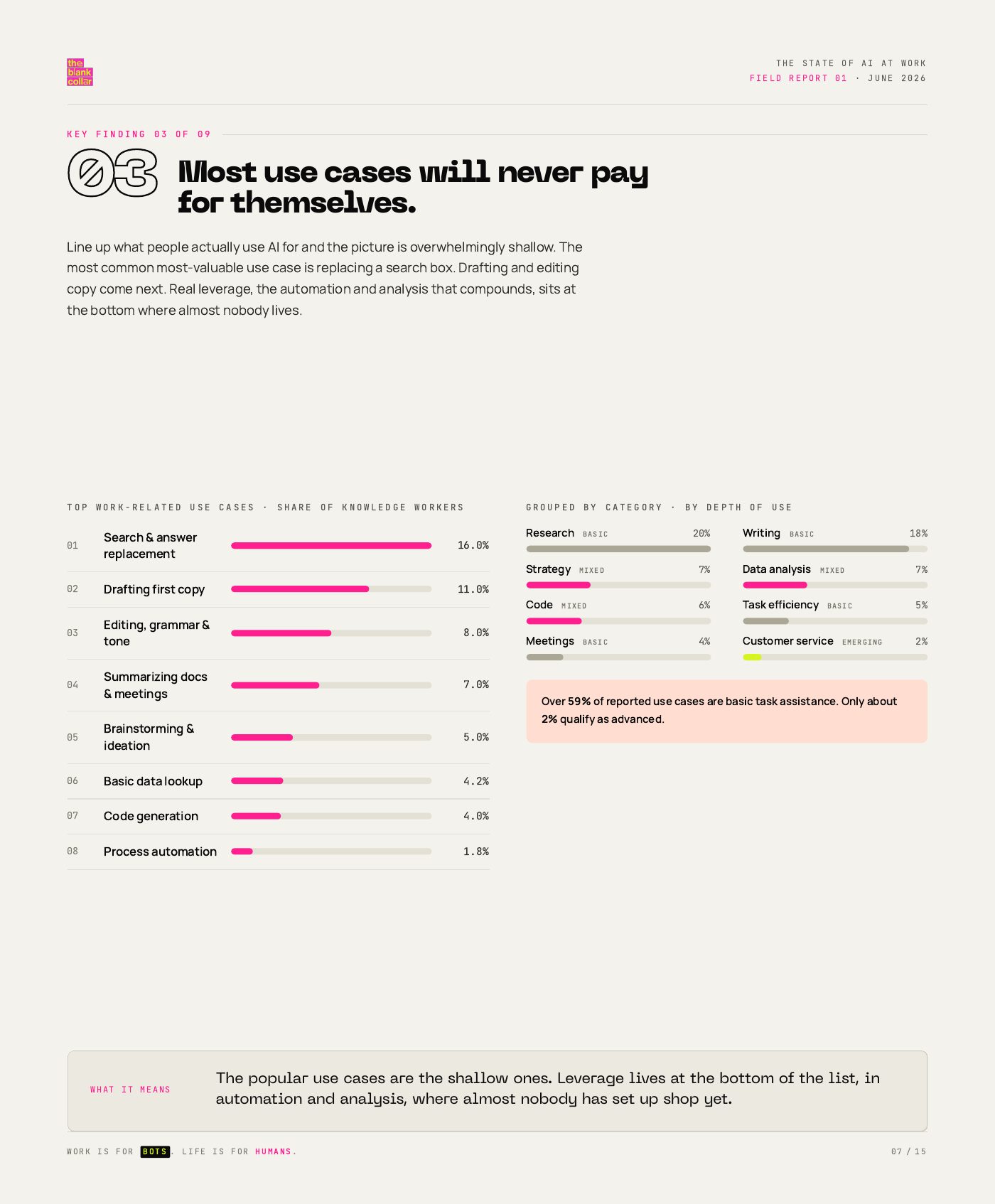
The most common use case is replacing a search box. Drafting and editing copy come next. Useful, and marginal: they make a task faster without changing what the task is worth. The value is in redesigning the work, and a faster version of the old task is still the old task.
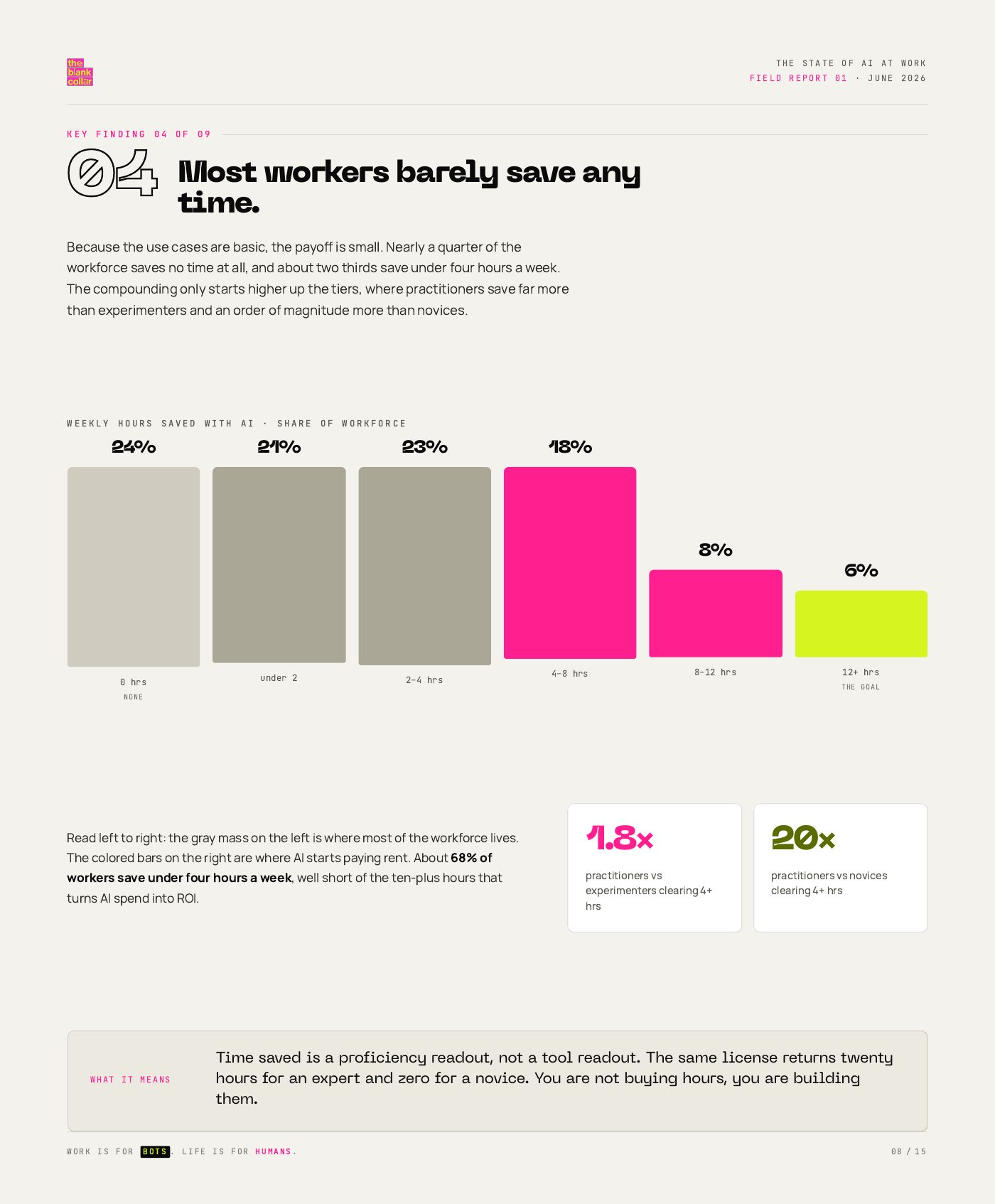
Ask people how much time AI saves them each week and the distribution is sobering. Nearly half save under two hours. One in seven saves eight hours or more.
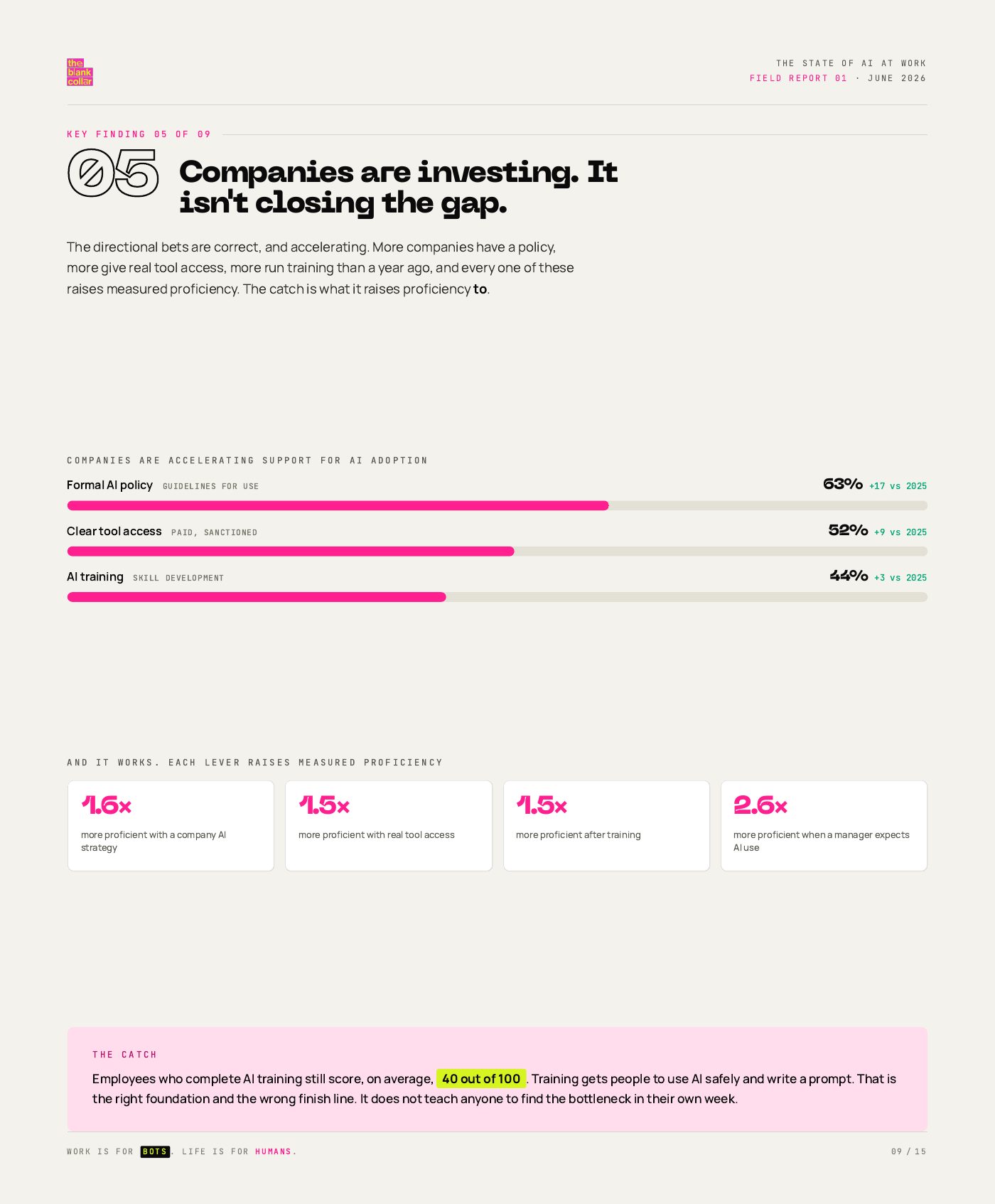
Organizations are spending: 63% have an AI policy, 52% have rolled out tools, 44% offer training. Even staff who have been trained score 40 out of 100 on proficiency, on average. The spend is buying inputs.
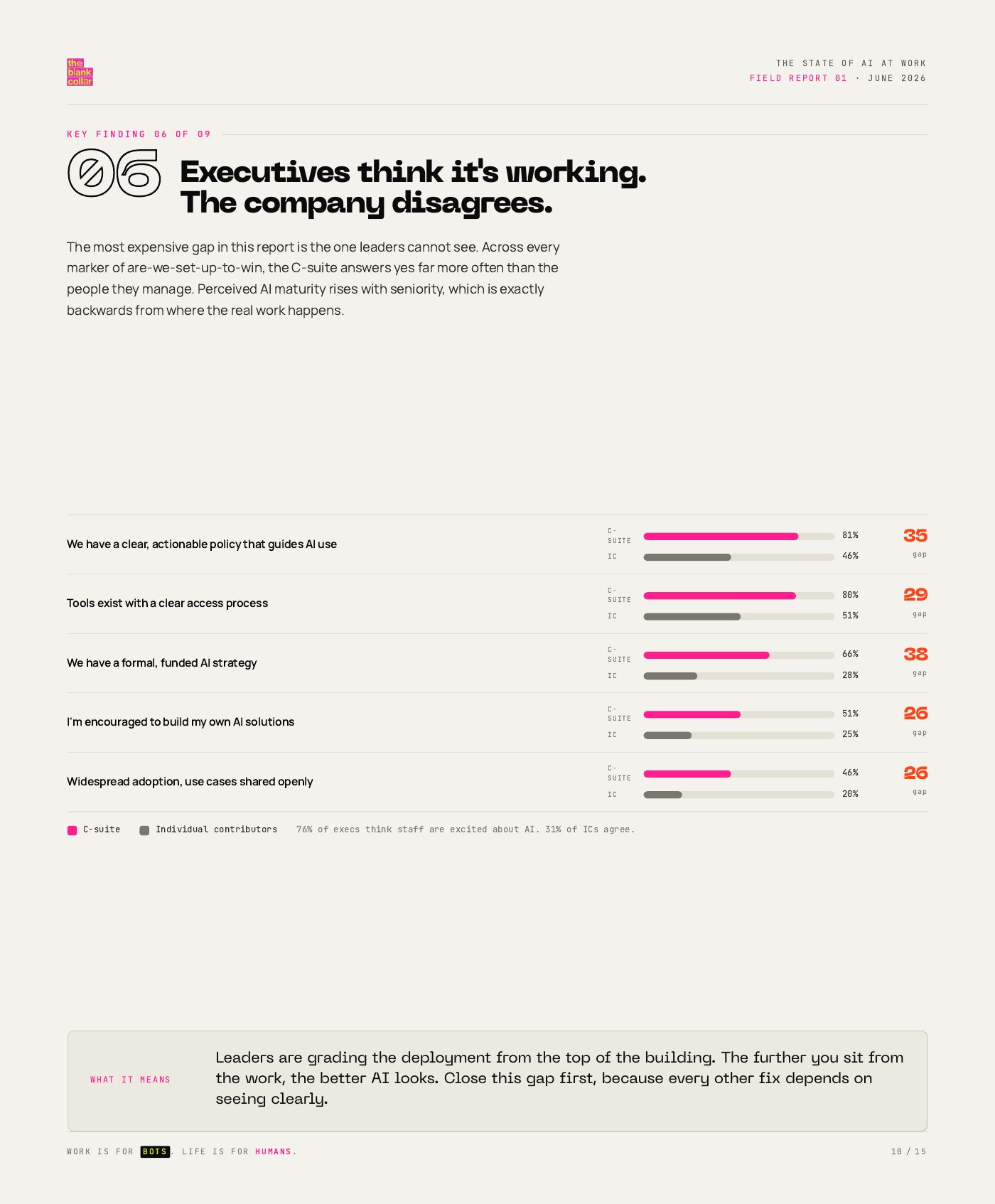
On almost every measure of AI maturity, the C-suite rates the organization 26 to 38 points higher than the individual contributors doing the work. Leadership is grading a company it does not actually operate.
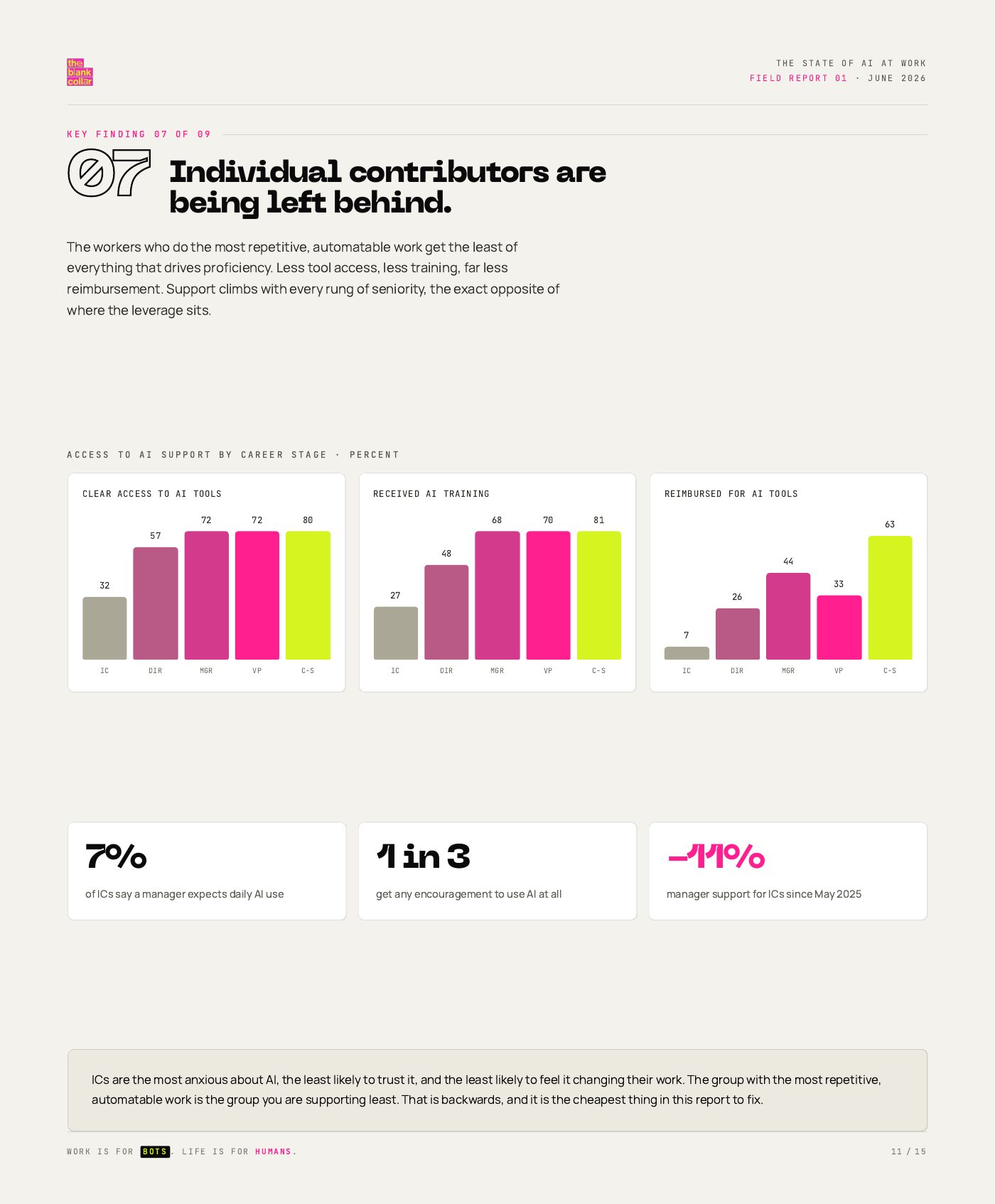
The people closest to the work get the least of everything that drives proficiency: less tool access and less training, and far less reimbursement. Support climbs with every rung of seniority. The layer with the most use cases is the layer the investment reaches last.
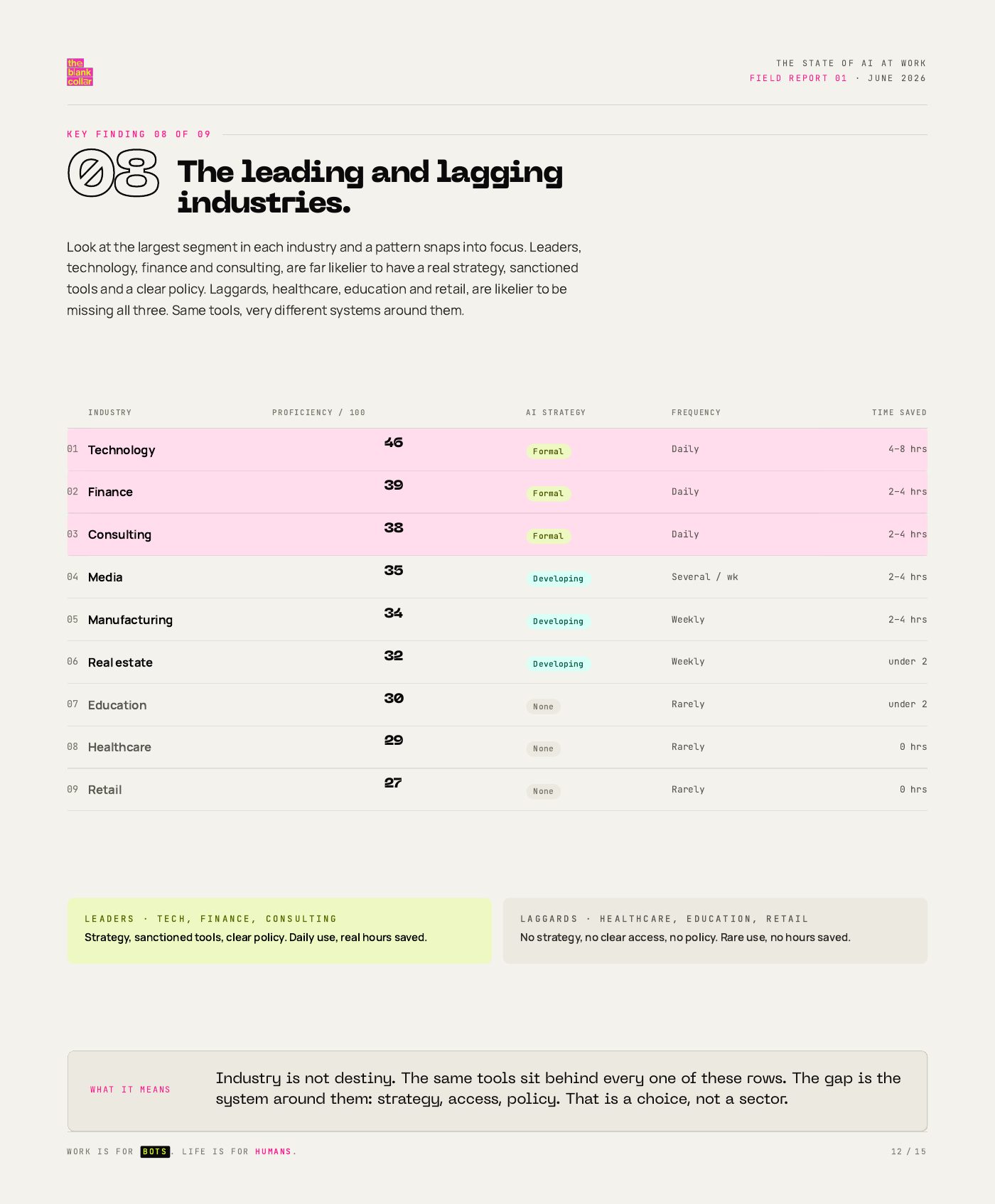
Technology leads on proficiency, with finance and consulting close behind. The leaders tend to have a real strategy and sanctioned tools with a clear policy around them. Education, healthcare and retail sit at the bottom and are likelier to be missing all three.
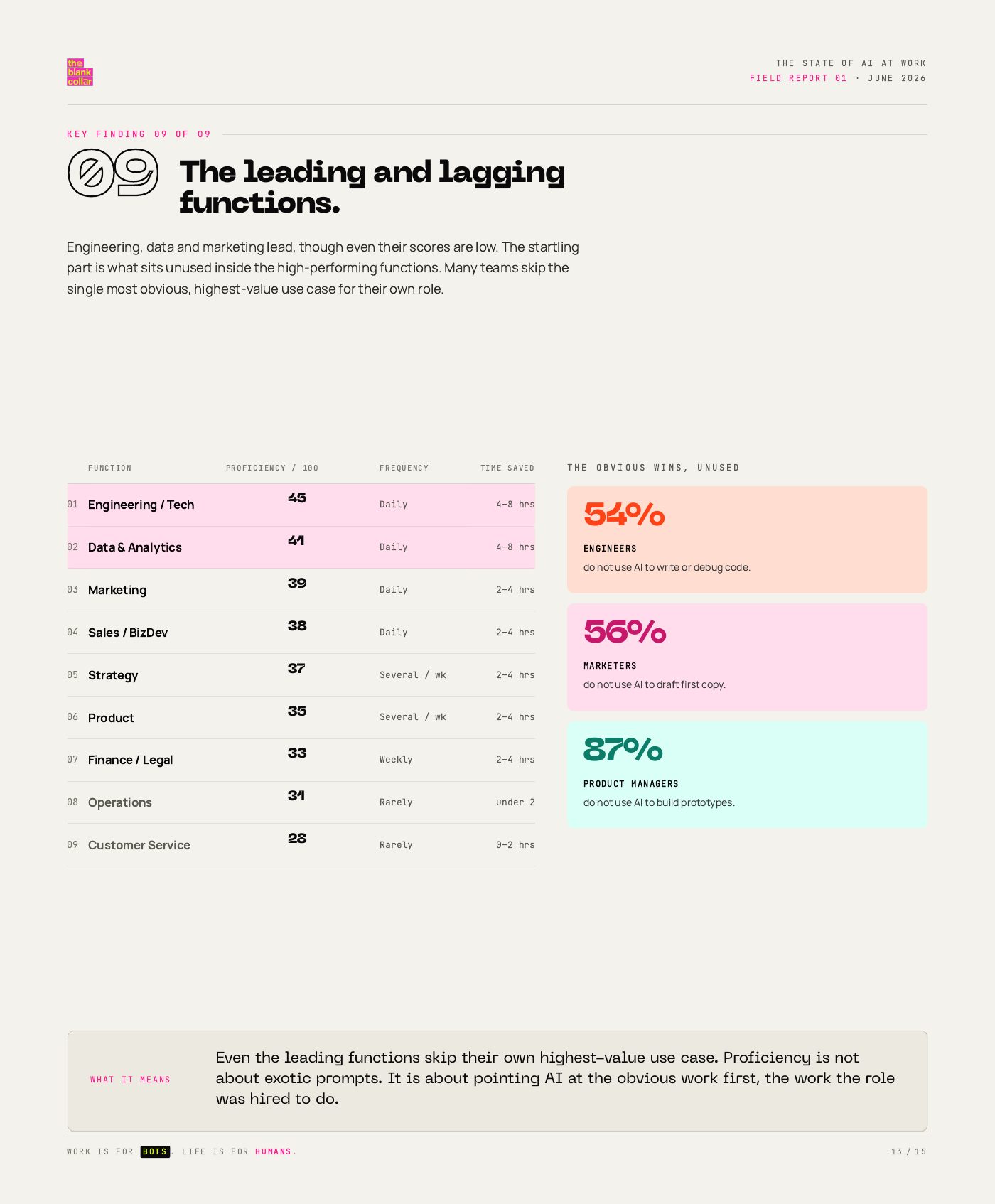
Engineering leads the functions, with data and marketing behind it, and even their scores are low. Most others trail, and the leaders routinely skip their single most obvious use case. What’s missing is the discipline to point AI at the obvious work first.
All 15 pages, the way they are designed. Page through it here, or take the PDF with you.
AI proficiency is the ability to use AI for real, value-generating work, every week. Drafting an email or replacing a search box was the 2025 bar. It matters because adoption is already solved (about 76% of employees use AI), so the gap between people who use AI and people who use it well is now the entire competitive advantage.
About 76% of employees use AI at work in some form, and over a billion people use ChatGPT every week. But roughly 87% use it at a beginner level or not at all, and only about 13% use it for 30% or more of their daily work.
Only about 29% of organizations report meaningful ROI from AI because they invest in inputs (policies, tools, training) rather than outcomes. Most use cases speed up old tasks instead of redesigning the work, so the value never compounds.
Roughly two thirds of users save under four hours per week, and nearly a quarter save no time at all. The time savings are real but marginal, because most people apply AI to low-value tasks.
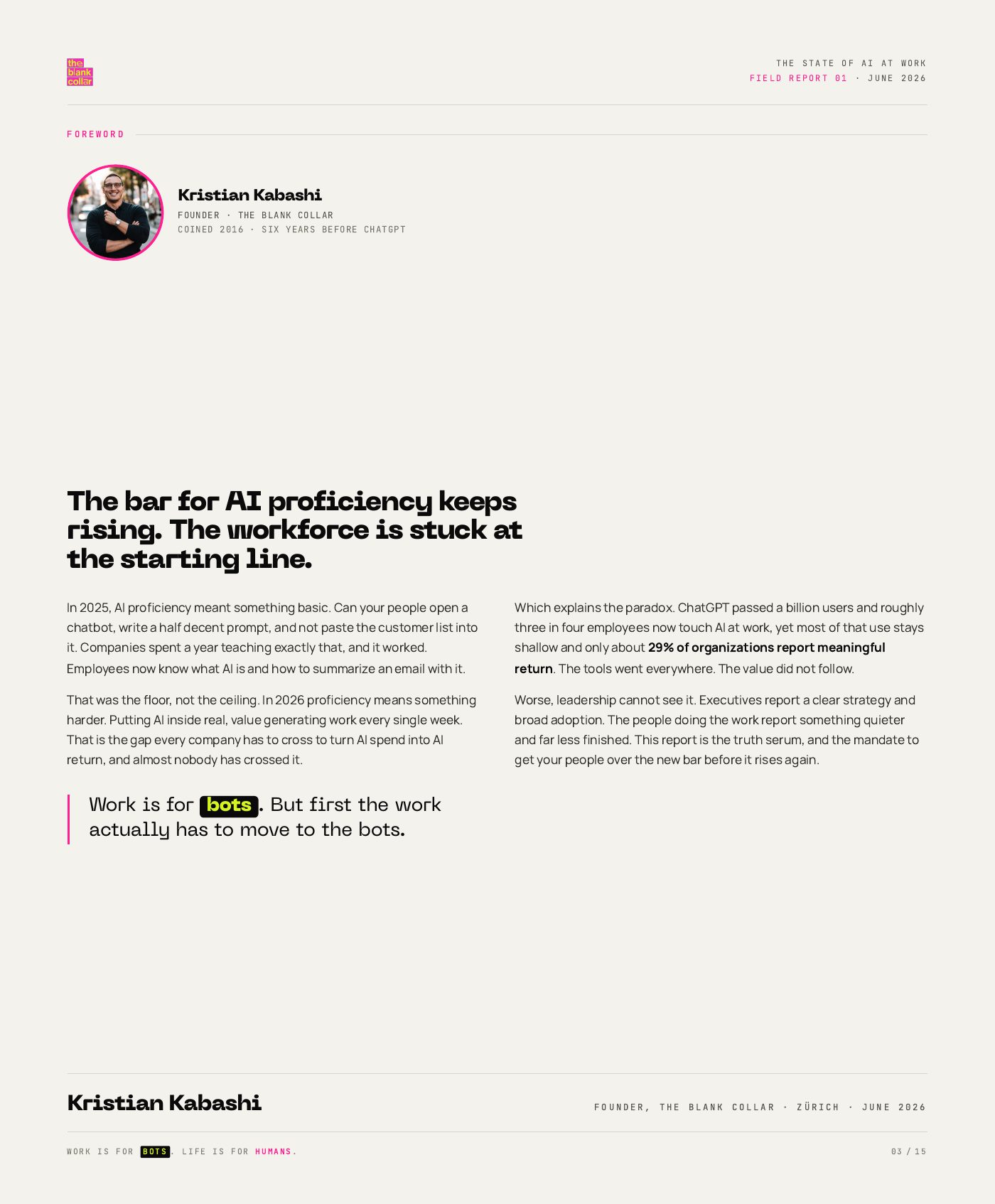
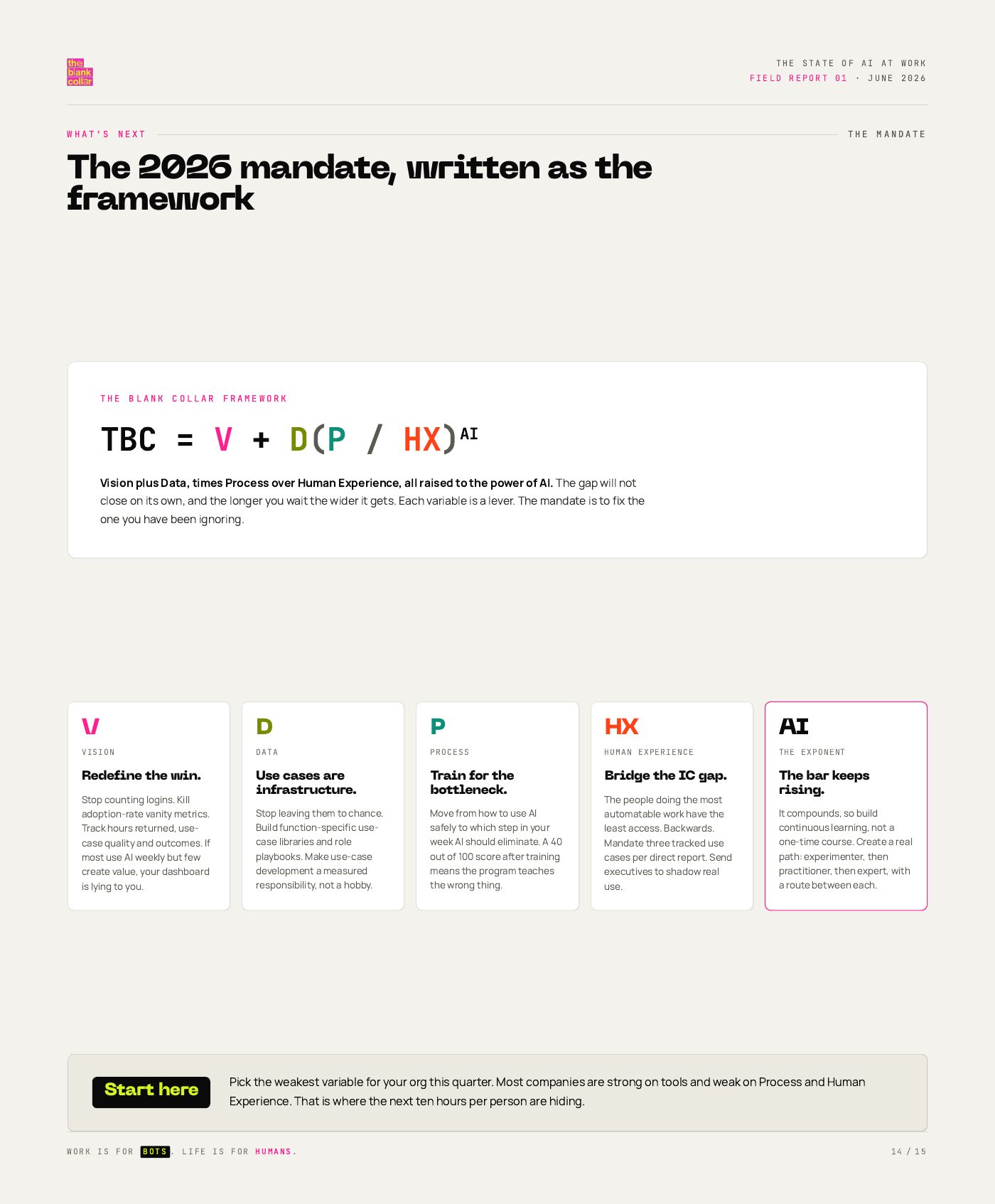
The Blank Collar framework reads as Vision plus Data, times Process over Human Experience, raised to the power of AI. It says: minimize the process you hand to machines, maximize the human experience only people can own, and let AI multiply the result.
The State of AI at Work is a 2026 field report by Kristian Kabashi, founder of The Blank Collar. He defined the term “blank collar” in 2016 and founded the practice in 2018. He works from Zürich, Switzerland.
All 15 pages in one PDF, dated June 2026. Read it, then put the framework to work on the lever you have been ignoring.
Download the PDF